
Fire alarms
Interlinked smoke, heat and carbon monoxide alarms for homes and rented properties, and fire alarm panel systems for shops, offices, HMOs and communal areas. Designed to BS 5839, installed, tested and certified across Bristol, Bath and the South West.
What's involved
In most homes, fire detection means smoke and heat alarms that each have their own sounder and are linked together, so when one goes off they all do. Larger and non-domestic buildings usually need a fire alarm system: detectors, manual call points and sounders wired back to a control panel.
Home alarms follow BS 5839-6. The usual choice is Grade D1: mains-powered alarms with sealed backup batteries, interlinked by cable or by wireless radio, which saves lifting floors and chasing walls in a finished home. The category sets how much of the home is covered, from LD3 (escape routes) to LD2 (plus higher-risk rooms) and LD1 (most rooms). Kitchens get heat alarms, which don't go off with cooking smoke, and rooms with a fuel-burning appliance get a carbon monoxide alarm.
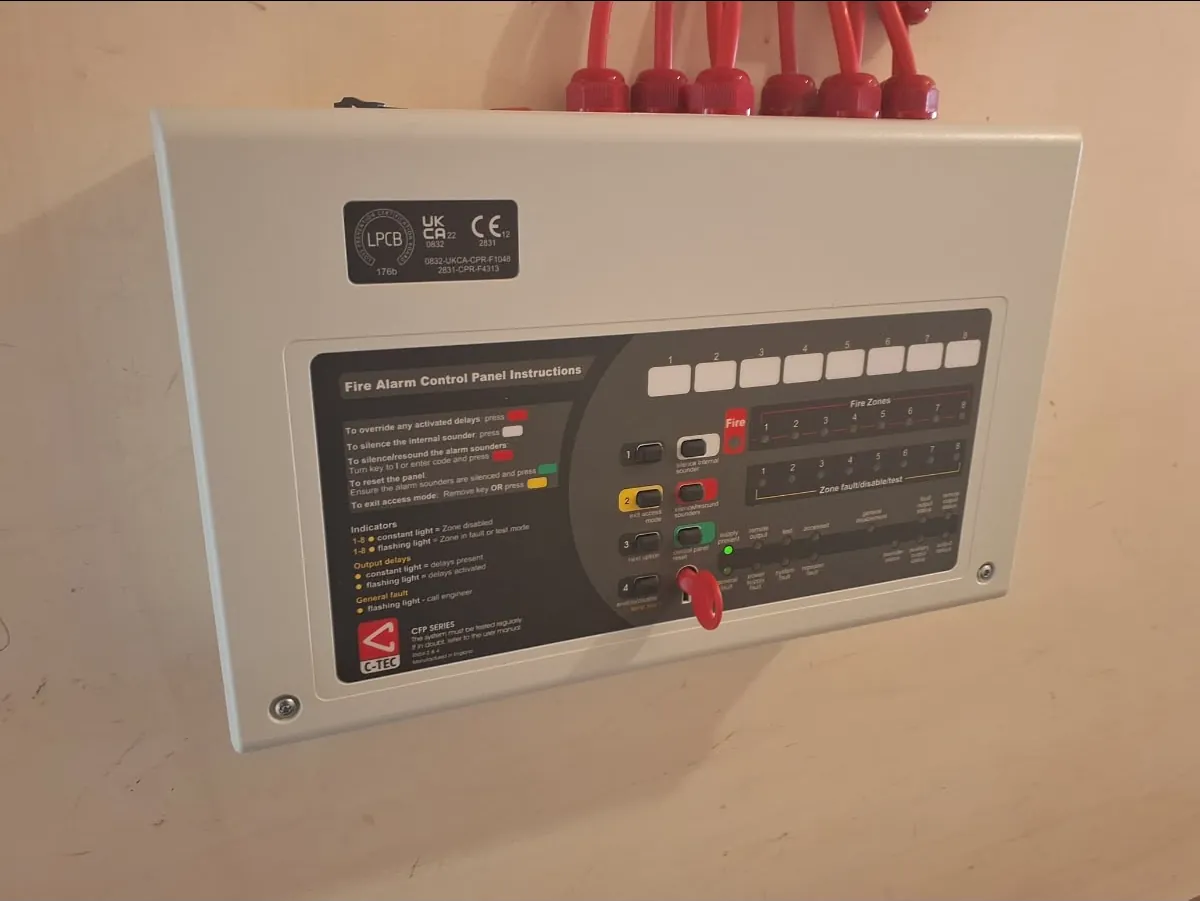
Panel systems follow BS 5839-1. A conventional panel splits the building into zones and shows which zone the alarm came from. An addressable panel identifies each individual device, which helps in bigger buildings. We can fit emergency lighting alongside, so escape routes stay lit if the power fails.
We design the system to the right grade and category, install it, commission it and certify it. If you have a fire risk assessment, we work to what it recommends.
When you need one
- You're a landlord in England: you need a smoke alarm on every storey and a carbon monoxide alarm in rooms with a fixed combustion appliance.
- Your smoke alarms are battery-only, not linked together, or past the replacement date printed on them.
- You're adding an extension or loft conversion, which usually means bringing alarms up to current standards.
- You're the responsible person for a shop, office, HMO or block of flats. Under the Regulatory Reform (Fire Safety) Order 2005 you need a suitable alarm system that's kept maintained.
- Your panel shows a fault, keeps giving false alarms, or is old and hard to get parts for.
What affects the cost
- The number of alarms or detectors and, for panel systems, the number of zones.
- The panel type: conventional or addressable.
- Wired or wireless. Wireless devices cost more, but there's less labour and disruption.
- The building layout: floors, ceiling heights and how cables can be routed.
- Whether existing cabling can be reused, and extras such as emergency lighting.
We'll look at the building and give you a clear quote before any work starts.
What happens on the day
- We agree timings, and tell you if existing alarms will be out of action while we work.
- We fit the alarms, detectors, call points and sounders, with cables run neatly out of sight where possible.
- We commission the system, testing every device and checking the alarm can be heard throughout.
- We show you how to test, silence and reset it, and leave the area tidy.
- You get the certificates for the installation to keep with your records.
Testing, servicing and repairs
We service and test existing panel systems, find and fix faults, replace failed detectors, and add devices or zones when a building changes. BS 5839-1 recommends servicing by a competent person at least every six months, with each visit recorded in the logbook. We can put your building on a six-monthly schedule and carry out emergency lighting tests at the same visits.
Why choose us
Fully qualified & insured
Your alarms are fitted by a qualified electrician, and every job is fully insured.
High standards of workmanship
Neat cable runs, every device tested, and clear paperwork at the end.
Customer satisfaction our priority
Honest advice about what your building actually needs, and a clear quote before we start.
Excellent service
Fire alarm questions
What alarms does a landlord have to fit?
In England, private landlords must have at least one smoke alarm on every storey used as living accommodation, and a carbon monoxide alarm in any room with a fixed combustion appliance, such as a gas boiler or wood burner. Alarms must be working at the start of each tenancy, and repaired or replaced once you're told they're faulty. HMOs and larger buildings may need more, depending on the fire risk assessment.
Do my smoke alarms need to be interlinked?
Interlinked alarms are usually required for new builds, extensions and loft conversions, and they're strongly recommended in every home, because a fire in one room sets off every alarm. If running new cables would be disruptive, mains alarms with wireless interlink are a good option.
How often should a fire alarm system be tested and serviced?
For a panel system, BS 5839-1 expects a weekly test, setting off a different call point each time and writing the result in the logbook. Servicing by a competent person is usually every six months. Home smoke alarms should be tested regularly by pressing the button, and replaced by the date printed on them.
Can you add to an existing system?
Usually, yes. We can add detectors, call points, sounders or zones to an existing panel as long as the new parts are compatible with it. If the panel is old and parts are no longer made, we'll explain your options, including a new panel that reuses the existing cabling where it's in good condition.
What's the difference between a smoke alarm and a fire alarm system?
A smoke alarm is a self-contained unit with its own detector and sounder, usually mains-powered with a backup battery and linked to the other alarms in the home. A fire alarm system has separate detectors, call points and sounders wired back to a control panel, which shows where the alarm came from and monitors the system for faults. Homes normally use smoke alarms; shops, offices, HMOs and communal areas often need a panel system.
Get a free quote
Tell us about the building and we'll give you a clear quote before any work starts.