
Commercial EICR and fixed wire testing
Periodic inspection and testing of the fixed wiring in offices, shops, schools, care homes and other business premises across Bristol, Bath and the South West. Testing is planned around your opening hours, every observation in the report is explained in plain language, and you get a clear quote for any remedial work before it starts.
Who it's for
Business owners, landlords of commercial units and facilities managers, including:
- Offices, shops, cafés, pubs and salons.
- Gyms, small warehouses and workshops.
- Schools and nurseries.
- Care homes.
- HMOs, and the communal areas of blocks of flats: stairwell lighting, landlord supplies and door entry. There's more for landlords and letting agents on their own page.
For a house or a rented home, see EICRs for homes and landlords.
Why you need one
The Electricity at Work Regulations 1989 require employers and anyone in control of premises to keep electrical systems maintained so they don't cause danger. The law doesn't set a testing interval, but periodic inspection and testing, recorded on an Electrical Installation Condition Report (EICR), is the usual way to show you're meeting that duty.
Many insurers ask for a current report, and commercial leases often say whether the landlord or the tenant is responsible for testing. If you're not sure who it falls to, check your policy wording and your lease.
How often
Typical maximum intervals, from the IET's guidance on inspection and testing, are:
- Offices, shops, salons, cafés, restaurants, pubs and hotels: every 5 years.
- Schools and nurseries: every 5 years.
- Industrial units, warehouses and workshops: every 3 years.
- Leisure premises such as gyms: every 3 years.
- HMOs and rented flats: at least every 5 years, which is also the legal minimum for private rented homes in England.
These are maximums for an installation in good condition. The inspector can recommend a shorter interval, and a change of occupier is a sensible time for a new report.
What happens on the day
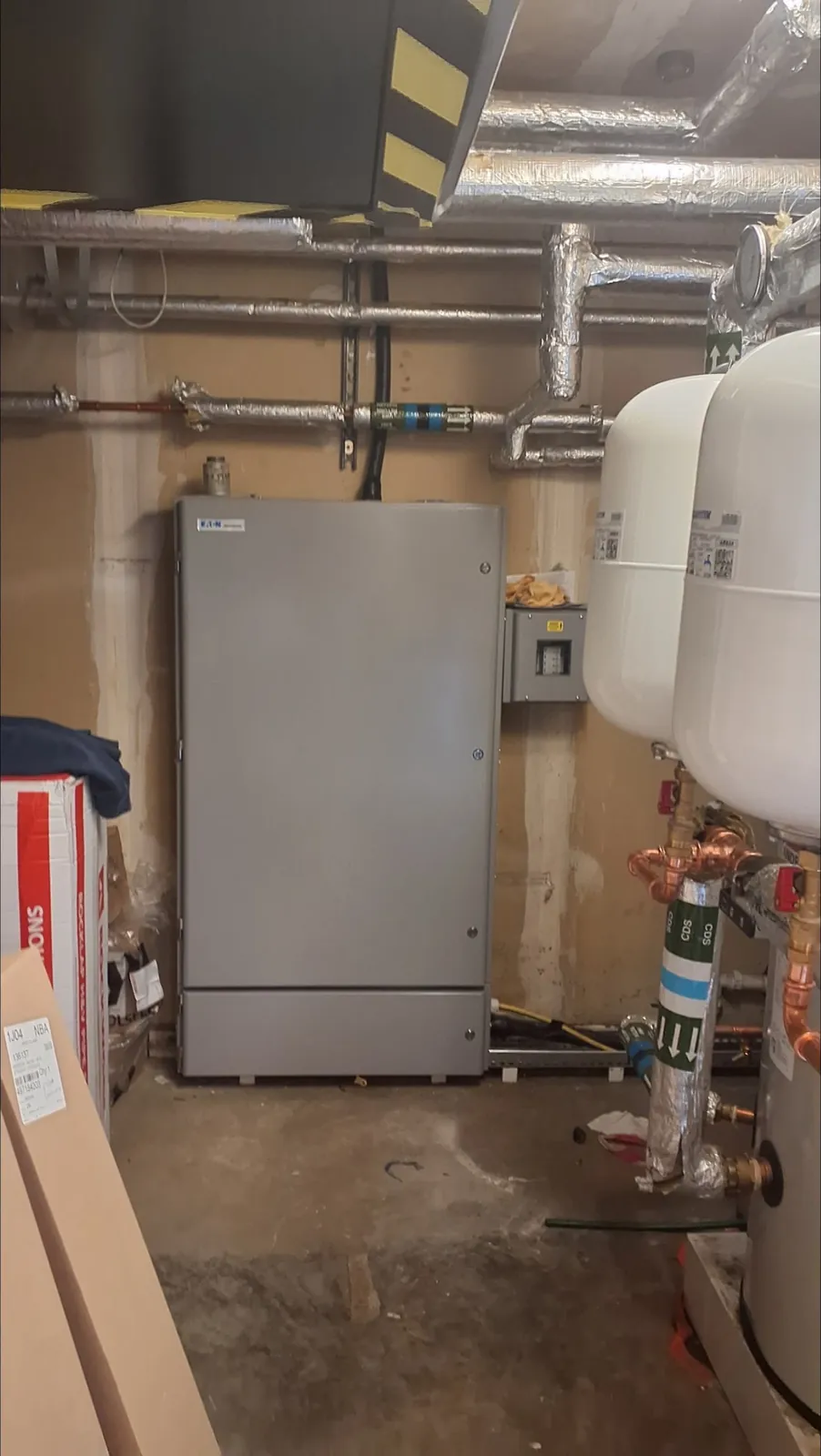
- We agree the scope first: how many boards and circuits, any drawings or previous report, and how we'll get to the distribution boards.
- Testing can be done early in the morning, in the evening or at weekends, so you can keep trading.
- We test circuit by circuit, so power is only off on one circuit at a time. We agree in advance what must stay on, such as servers, tills or fridges. Anything that can't be switched off is recorded as a limitation on the report.
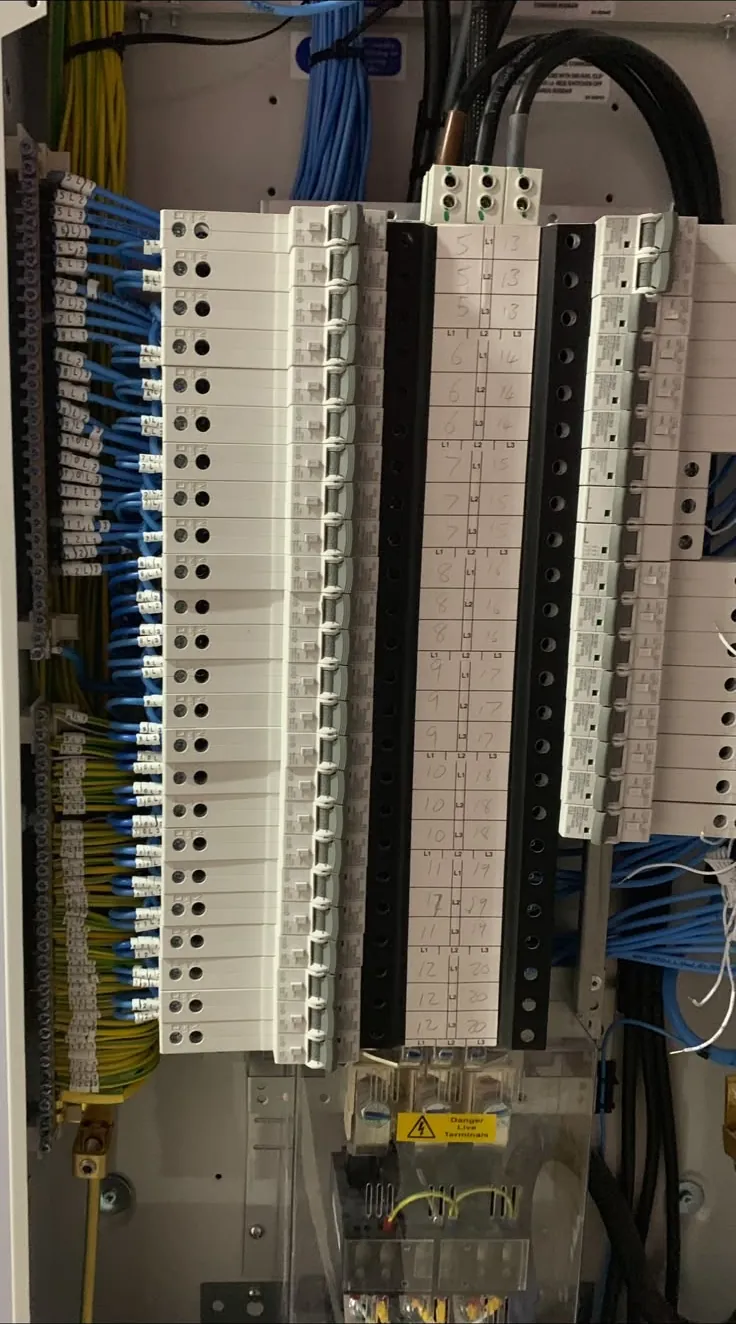
- Board schedules are updated, and circuits are labelled where labels are missing or wrong.
The report and the codes
Each issue is recorded with a code:
- C1: danger present. Needs putting right immediately.
- C2: potentially dangerous. Needs putting right urgently.
- C3: improvement recommended.
- FI: further investigation needed.
Any C1, C2 or FI makes the report unsatisfactory. C3 items alone don't. The report also gives a recommended date for the next inspection.
Remedial work and re-testing
If the report is unsatisfactory, we explain each item and give you a clear quote for putting it right, carried out as part of our commercial installations work. Once the work is done, it's tested and you get a certificate for it. Keep that with the EICR as proof the issues were dealt with.
Several sites or a portfolio
If you look after more than one building, you get one contact for all of them. We can schedule inspections by due date and stagger them so no site is short of power for long. We also carry out fire alarm servicing, emergency lighting tests and PAT testing, so your other checks can be planned alongside the EICR.
What you'll receive
- The EICR as a PDF, by email.
- Certificates for any remedial work.
- Updated board schedules on site.
- Insurance details on request.
Book a site visit
Call 07477 017759 or email info@es-sw.co.uk with the address, the type of premises, how many boards you think there are and a copy of your last report if you have one. We'll arrange a visit and give you a clear quote before any work starts.
Arrived when they said they would and got the job complete as agreed. Will be using again.
Commercial EICR questions
Is fixed wire testing the same as an EICR?
Yes, in practice. Fixed wire testing is the inspection and testing of the wiring, boards and circuits built into the building. The EICR is the report it produces. It doesn't cover plug-in equipment, which is checked separately by PAT testing.
Is it a legal requirement for my business?
The Electricity at Work Regulations 1989 require you to keep electrical systems safe, but they don't set a testing interval. Regular inspection and testing is the usual way to show you're meeting that duty. Your insurer or lease may also require a current report.
Can you test outside our opening hours?
Yes. Testing can be planned for early mornings, evenings or weekends. Where the power has to go off on a circuit, we agree when with you beforehand and keep it as short as we can.
Will our computers and servers lose power?
Only when their circuit is being tested, and we agree that with you first. Shut down computers and sensitive equipment before their circuit goes off. If something can't be switched off at all, we record it as a limitation on the report rather than isolate it.
How long does a commercial EICR take?
It depends on the number of boards and circuits and how easy they are to reach. A small shop or office can often be done in a day; larger sites may need several visits. We'll give you an estimate after a site visit or from your last report.
Get a free quote
Tell us about your premises and roughly how many boards there are. We'll arrange a site visit and give you a clear quote before any work starts.